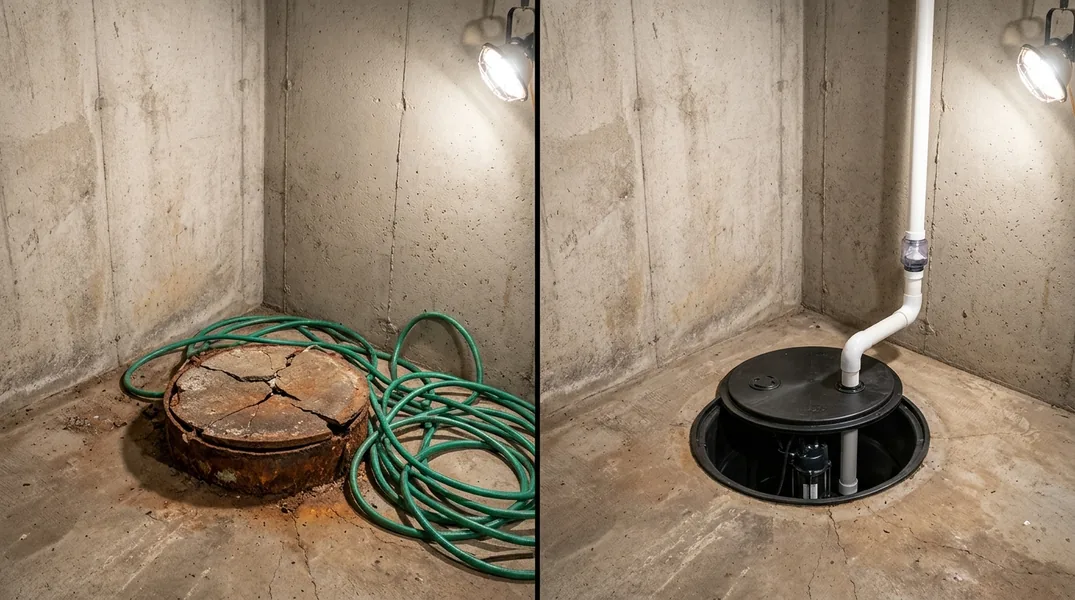
Why the Spring Thaw Is the Real Test for Your Sump Pump
In Worcester, the shift from frozen ground to mud season happens fast. One week your yard is solid, and the next, snowmelt and April showers are sending hundreds of gallons of water toward your foundation. Your sump pump has been sitting idle for months, and that first big melt is when it either performs or fails. A pump that ran fine last spring can seize up over the winter due to rust, debris, or a stuck float switch.
This checklist is built for homeowners who want to stay ahead of that moment. You do not need to be a plumber to run through it, but you do need to be honest about what you find. If something looks worn or sounds wrong, replacing a $20 part now is far cheaper than replacing a flooded basement later. For homes that have never had a backup system, this is also the season to think seriously about one, because spring storms in Central Massachusetts are notorious for knocking out power right when you need the pump most.
Start With the Basics: Power, Float, and Discharge Line
Before you touch anything, unplug the pump from its outlet. Then check the power source itself. If your pump is plugged into a standard outlet, make sure the breaker is on and the outlet is not tripped. If it is hardwired, confirm the circuit is live. Next, lift the float switch by hand. You should hear a clear click as it engages. If the float feels sticky or the click is faint, the switch may be failing, which is one of the most common reasons pumps stop working during a storm.
The discharge line is just as important. Trace the pipe from the pump to the exterior and look for cracks, loose clamps, or sections that could freeze. In Northborough and similar towns, discharge lines often run to a dry well or daylight, and winter frost can shift the pipe or clog the end with leaves and ice. Clear the outlet, then pour a few gallons of water into the pit to confirm the pump kicks on and moves water out smoothly. If the flow is weak or the pump cycles constantly, the line may be partially blocked.
The Sump Pump Check Valve: Small Part, Big Consequence
A sump pump check valve is a one-way flap that stops water from flowing back into the pit after the pump shuts off. Without a working valve, every cycle sends water back down the discharge line, forcing the pump to run again and again. That short cycling burns out motors and can leave you with a dead pump in the middle of a downpour. Locate the valve on the vertical discharge pipe, usually just above the pump, and inspect it for mineral buildup or a stuck flap.
If the valve is more than a few years old or you cannot remember the last time it was replaced, swap it out. It is an inexpensive part and one of the easiest upgrades you can make. While you are in the pit, also check that the valve is installed in the correct direction, with the arrow pointing away from the pump. A backwards valve will block water entirely, which is a quick way to flood a basement during the spring thaw. If you are unsure about the setup, a professional inspection can confirm the valve and the entire discharge assembly are working together.
Battery Backup Sump Pump: Your Insurance Against Storm Outages
Spring storms in Worcester County frequently knock out power, and a primary sump pump is useless without electricity. A battery backup sump pump runs on a charged battery and kicks in automatically when the main pump loses power or cannot keep up with the volume. If you already have one, test it now. Most units have a test button or a float you can lift manually. Confirm the battery is fully charged, the terminals are clean, and the backup pump actually moves water.
Battery age matters. Most backup batteries last three to five years, and a battery that sat through a cold winter may not hold a charge. Check the water level in flooded-cell batteries and top it off with distilled water if needed. If your backup system is older than five years or you have never tested it, consider having it serviced or replaced before the melt begins. Homeowners in Westborough and Marlborough face the same risk, and a backup pump is often the difference between a dry floor and a costly cleanup.
Storm Basement Flooding: When to Call a Pro for Sump Pump Maintenance Near Me
Some issues are DIY friendly, but storm basement flooding often points to a bigger problem than a worn pump. If your pit fills faster than the pump can drain it, if water seeps up through the floor rather than into the pit, or if the pump runs constantly during moderate rain, the issue may be your drainage system rather than the pump itself. In those cases, a professional evaluation of your Basement Waterproofing setup is the right next step. A properly sized Interior Drain Tile System and a correctly installed pump work together, and one weak link can undermine the whole system.
If you are searching for sump pump maintenance near me and want a straightforward assessment, Worcester Waterproofing can inspect your pump, check valve, discharge line, and backup system in one visit. We also evaluate whether Exterior Basement Waterproofing or Foundation Waterproofing would reduce the load on your pump. You can request a free estimate or call (774) 431-8619 to schedule. If you want to understand pricing before you book, our team can walk you through typical ranges for your situation.
A Simple Pre-Thaw Routine That Saves Thousands
Once you have tested the pump, cleared the discharge line, confirmed the check valve, and checked the backup battery, set a reminder to repeat the test in early March and again in April. The spring thaw in Worcester can stretch over several weeks, and a pump that works in February may struggle by the time the ground is fully saturated. Keep the pit clear of debris, and never place a cover over the pit that traps moisture or blocks the float.
Finally, listen to your pump. A healthy pump sounds steady and shuts off cleanly. Grinding, rattling, or repeated short cycling are warning signs that deserve attention before the next storm. If you would rather have a professional handle the checklist, Worcester Waterproofing serves homeowners across the region and can confirm your system is ready for the melt. Call (774) 431-8619 or reach out online to book a visit and protect your basement before the water arrives.
Looking for a professional basement waterproofing contractor in Worcester? Worcester Waterproofing responds fast for all your basement waterproofing needs.
Get a Free QuoteOur services: Basement Waterproofing · Interior Drain Tile System · Exterior Basement Waterproofing